2026-11-11 · Kaleo Nakamura
Preventing Mold Growth After Leaks in Manoa Valley Homes
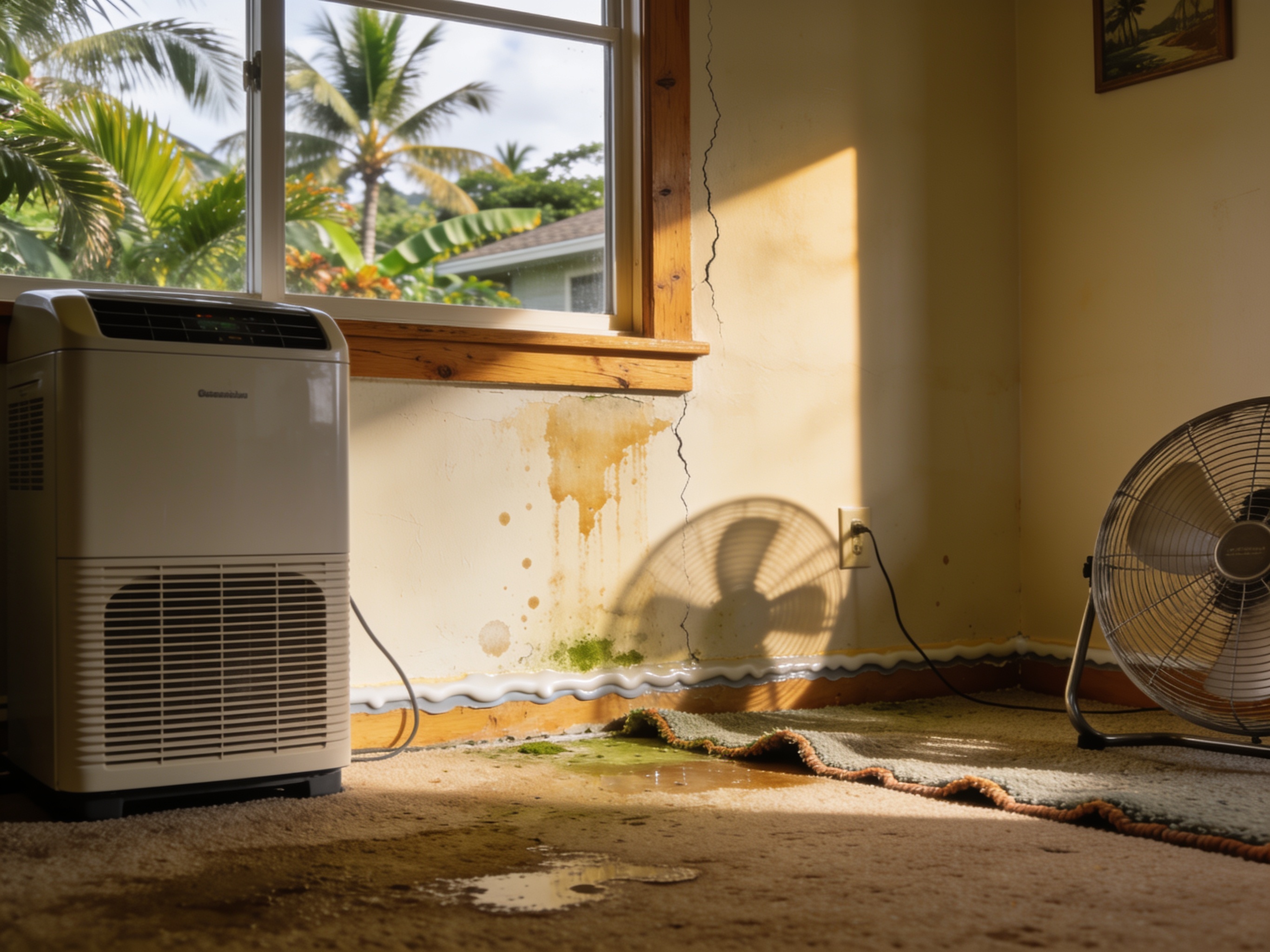
Mold can begin growing within 24-48 hours after a leak in Manoa Valley homes if excess moisture is not removed right away. The valley's enclosed terrain and frequent trade winds trap humidity around older wooden structures and crawl spaces common in the neighborhood, allowing spores to settle in damp drywall, flooring, and insulation before homeowners notice. Acting during the dry season still requires speed because even brief saturation from pipe leaks or roof seepage creates ideal conditions in homes built decades ago near the University of Hawaii campus.
Recognizing Early Signs of Moisture in Manoa Homes
Manoa Valley homes often feature single-wall construction and raised foundations that hide leaks until water reaches living areas. Check for musty odors near baseboards, discoloration on ceilings, or soft spots in hardwood floors after any plumbing issue. These homes sit in a microclimate where afternoon showers combine with valley fog to extend drying times compared to flatter parts of Honolulu County. Homeowners in nearby Nuuanu or Palolo report similar problems when trade winds push moisture into attics rather than clearing it out. Early detection prevents spores from spreading through HVAC systems common in these mid-century residences.
Drying Protocols Specific to Manoa Valley Conditions
Remove standing water first, then deploy air movers and dehumidifiers sized for the square footage affected. In Manoa, where relative humidity often stays above 70 percent even in the dry season, run equipment until moisture readings drop below 15 percent on wood and 50 percent on drywall. Focus on crawl spaces under many valley homes because trapped soil moisture prolongs the process. Water Damage Restoration crews familiar with these homes use moisture meters at multiple depths rather than surface checks alone. Avoid closing windows completely; controlled airflow from trade winds helps when paired with mechanical drying.
Long-Term Prevention for Older Manoa Structures
Seal exterior penetrations around windows and vents common in Manoa homes to limit future water entry during heavy rains. Install vapor barriers in crawl spaces where soil moisture rises through the valley floor. Schedule annual inspections of galvanized pipes that have aged in many neighborhood properties. Water Damage Repair work on these systems often reveals hidden rot that must be replaced before mold returns. Keep gutters clear of debris from surrounding vegetation so water flows away from foundations instead of pooling against older concrete slabs.
When to Call Professionals After a Leak
If water reaches more than 10 square feet or affects multiple rooms, contact specialists who understand Honolulu County's permitting and disposal rules. Handling Water Damage After Kona Wind Storms in Honolulu details how sudden gusts can drive rain under roofs in ways regular leaks do not. Document all steps taken before professional arrival so insurance claims move faster. Professionals bring industrial equipment that homeowners cannot rent locally and know how to dispose of contaminated materials without spreading spores to adjacent properties in dense Manoa blocks.