2026-11-11 · Kaleo Nakamura
What to Expect When Fixing Slab Leaks in Waikiki Condos
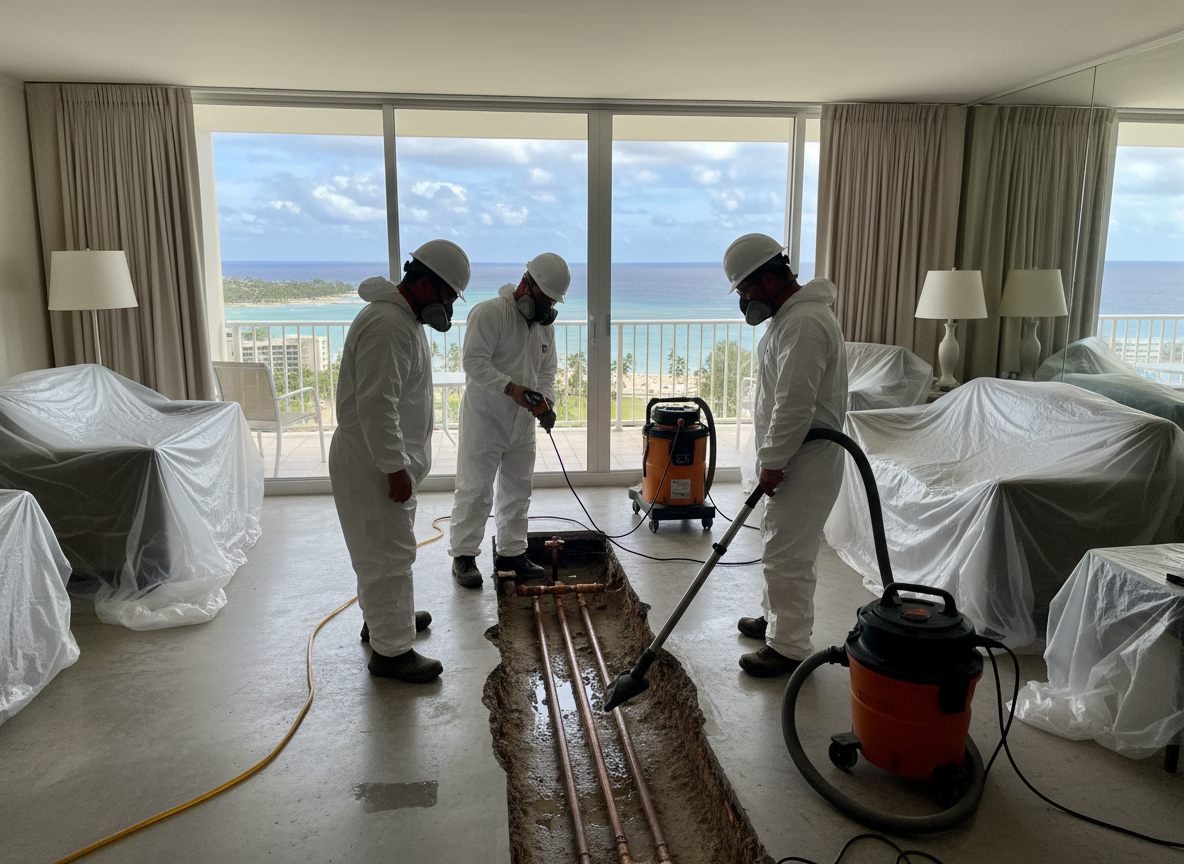
Slab leaks in Waikiki condos typically require 5-10 days to locate, access, repair, and dry once water is shut off and moisture mapping begins. Concrete slab construction common in buildings near Waikiki Beach and along Kalakaua Avenue means leaks in supply lines often travel under tile or carpet before signs appear in units on lower floors. Trade winds help accelerate surface drying but can push humidity into adjacent walls when windows stay open during work.
Identifying Slab Leaks in Waikiki Buildings
Waikiki high-rises built between the 1960s and 1980s frequently use post-tensioned slabs with copper or galvanized supply lines that corrode after decades of exposure to salt air. Residents first notice warm spots on floors, unexplained spikes in water bills, or musty odors near baseboards in units facing Diamond Head or the Ala Wai Canal. Technicians use acoustic listening devices and infrared cameras to pinpoint leaks without guessing, then confirm with pressure tests that isolate the line under the slab. In buildings around Kakaako and Moiliili, shared risers can send water into neighboring units, so mapping often extends beyond the reported address. Early detection prevents the need to remove larger sections of flooring later.
The Repair Process for Concrete Slab Leaks
Once located, crews cut a 12- to 18-inch trench through the slab using dust-controlled saws to reach the pipe, then replace the damaged section with new copper or PEX rated for Honolulu's mineral-rich water. Access is limited in Waikiki condos because many units have built-in cabinetry or tile that must be removed and later reinstalled. After the new pipe is pressure-tested, the trench is backfilled with non-shrink grout and the surface is leveled for new flooring. Throughout the process, negative air machines and dehumidifiers run continuously because the island's 70-80 percent relative humidity slows evaporation from the concrete. Technicians document every step with photos for the building management and unit owners.
Factors Affecting Timeline and Costs
Repair duration stretches when leaks have migrated toward load-bearing walls or into units on multiple floors, common in structures near Iolani Palace and Downtown Honolulu. Material costs for copper runs $8-12 per linear foot while concrete removal and patching adds $400-800 per affected area. Drying time depends on slab thickness and whether the leak reached carpet padding or drywall; in dry season months with steady trade winds, dehumidifiers can pull moisture levels below 15 percent in four to six days. Units in older Waikiki buildings often need permits from Honolulu County before slab work begins, adding one to two days to scheduling. Owners in nearby Aiea and Pearl City face similar concrete access issues but usually encounter fewer shared-wall complications than Waikiki high-rises.
Preventing Future Issues in Honolulu's Tropical Climate
After repair, installing access panels at shut-off valves and monitoring water pressure helps catch future leaks before they reach the slab. In Waikiki's salt-air environment, switching to PEX or epoxy-lined pipes during the fix extends service life beyond the original copper. Residents can reduce risk by scheduling annual pressure checks, especially before the wetter months when Kona winds bring heavy rain. For guidance on stopping mold after any remaining moisture, see Preventing Mold Growth After Leaks in Manoa Valley Homes. Full water extraction and drying details appear in our Water Damage Restoration service page, while targeted pipe and slab work is covered under Water Damage Repair. Contact Honolulu Water Damage Restoration Pros at 1750 Kalākaua Ave 2018 A, Honolulu, HI 96826 during Mon–Fri 8am–6pm or Sat 9am–2pm for site-specific assessments.