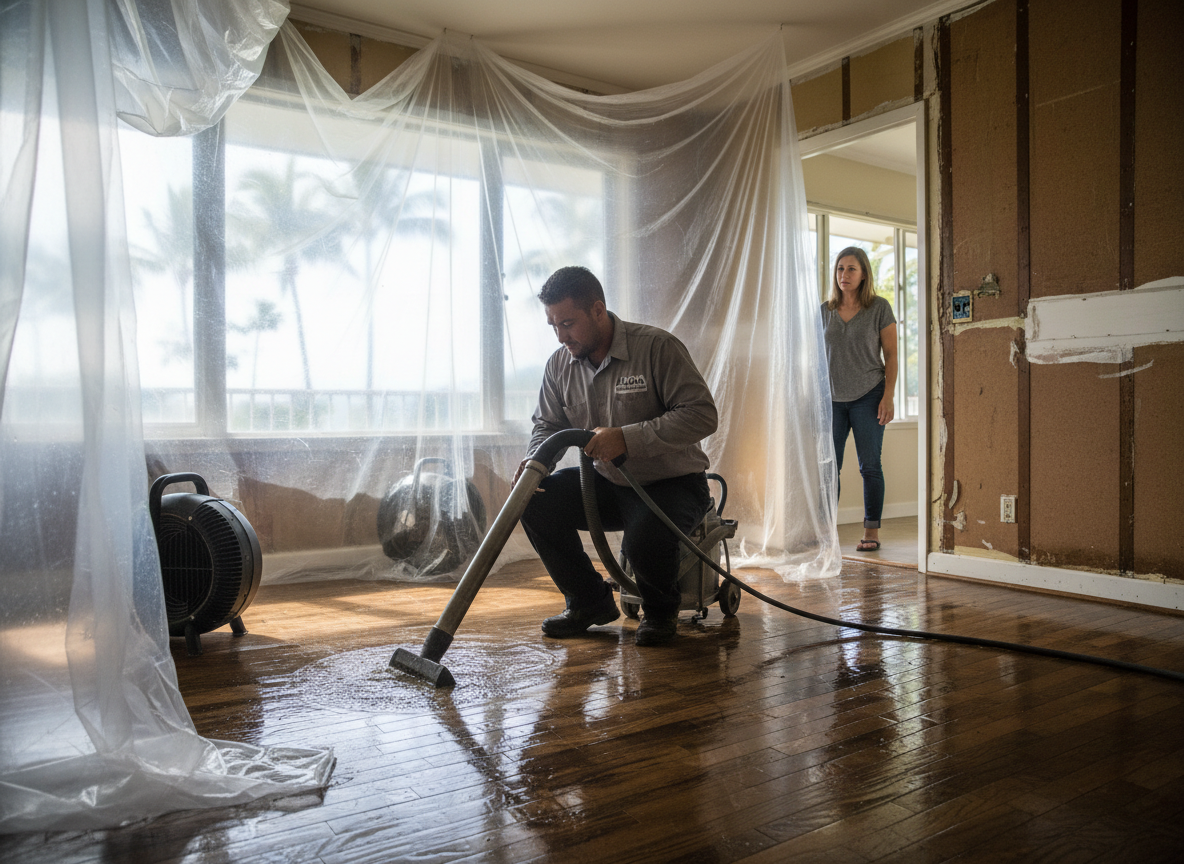
Honolulu’s older housing stock in neighborhoods like Nuuanu, Manoa and Kaimuki often features wooden framing and single-wall construction that absorbs moisture quickly. Once water enters these materials, the constant humidity and warm temperatures accelerate mold growth within 24–48 hours, especially during the wetter months before the dry season arrives. Technicians must remove baseboards and drill weep holes early to allow airflow, because closed-up rooms in these homes trap moisture against the studs.
Trade winds that normally help dry surfaces can push humid air through open windows in Waikiki and Kakaako high-rises, re-wetting already treated drywall. In ground-level homes near Pearl Harbor or in Kalihi, poor drainage and older cast-iron pipes increase the chance of recurring leaks under slabs. Repair crews therefore use moisture meters on concrete and behind tile before any reconstruction begins, avoiding callbacks that occur when hidden pockets remain.
County permitting in Honolulu requires documentation of drying logs when structural repairs affect load-bearing walls, common in pre-1960s homes in Palolo and Alewa Heights. Skipping this step delays insurance payouts. Crews also separate clean water from Category 3 intrusions immediately, because sewage lines in dense areas like Moiliili frequently back up during heavy rain.
Drying equipment must be sized for the island’s consistent 70–80 °F temperatures; oversized dehumidifiers can over-dry wood and cause cracking in vintage floors found in Downtown Honolulu and Kaimuki bungalows.
Technician insight
In Honolulu the thing that catches most people out with water damage repair is how quickly mold sets in behind single-wall construction once trade winds carry humid air through the house. Older homes in Nuuanu and Manoa hold moisture in the studs far longer than newer builds, so we always pull baseboards on day one.
Hidden Moisture In Kaimuki Bungalow
A homeowner in Kaimuki noticed ceiling stains after heavy rain. Inspection found water trapped in the original single-wall framing. Extraction and targeted drying prevented mold spread; affected sections were replaced and the home passed final moisture checks within five days.
Water Damage Repair Services We Offer
✓Emergency Water Extraction
Removes standing water from floors and carpets in Waikiki condos and single-family homes before humidity drives mold growth.
✓Structural Drying in Tropical Conditions
Uses industrial air movers and dehumidifiers calibrated for Honolulu’s trade-wind humidity to dry framing in older Nuuanu and Manoa houses.
✓Slab Leak Detection and Repair
Locates and fixes leaks under concrete slabs common in Kalihi and Kaimuki homes built before modern waterproofing standards.
✓Mold Remediation After Water Intrusion
Treats hidden mold colonies that form rapidly behind walls in humid Honolulu County properties when drying is delayed.
✓Category 3 Sewage Cleanup
Handles contaminated water from backed-up lines in dense neighborhoods like Moiliili where older infrastructure increases risk.
Water Damage Repair Cost in Honolulu, HI
| Service | Typical Range | What Affects It |
|---|---|---|
| Initial Assessment And Moisture Mapping | $125–$225 | Varies with home size and number of affected rooms in older Honolulu neighborhoods. |
| Emergency Water Extraction | $450–$950 | Depends on volume and whether Category 3 contamination is present. |
| Full Structural Drying Package | $1,200–$2,800 | Influenced by humidity levels, equipment runtime and square footage in single-wall homes. |
| Slab Leak Repair Coordination | $800–$1,600 | Includes detection; concrete restoration adds to total. |
Ranges are typical for Honolulu, HI and confirmed with an exact written quote before any work starts.
How it works
- 1
On-Site Assessment
Technician inspects affected rooms in the Honolulu home, maps moisture with meters, and notes construction type typical of the neighborhood.
- 2
Water Removal
Pumps and extractors remove standing water while separating clean versus contaminated sources before humidity spreads it further.
- 3
Drying And Monitoring
Equipment runs with daily moisture logs until readings match unaffected materials, accounting for trade-wind airflow patterns.
- 4
Repair And Restoration
Replace damaged drywall, subfloor and trim, then document work for Honolulu County permit requirements when structural changes occur.
Pricing
Upfront written quotes after inspection; final cost depends on water category, square footage and drying time required by local humidity.