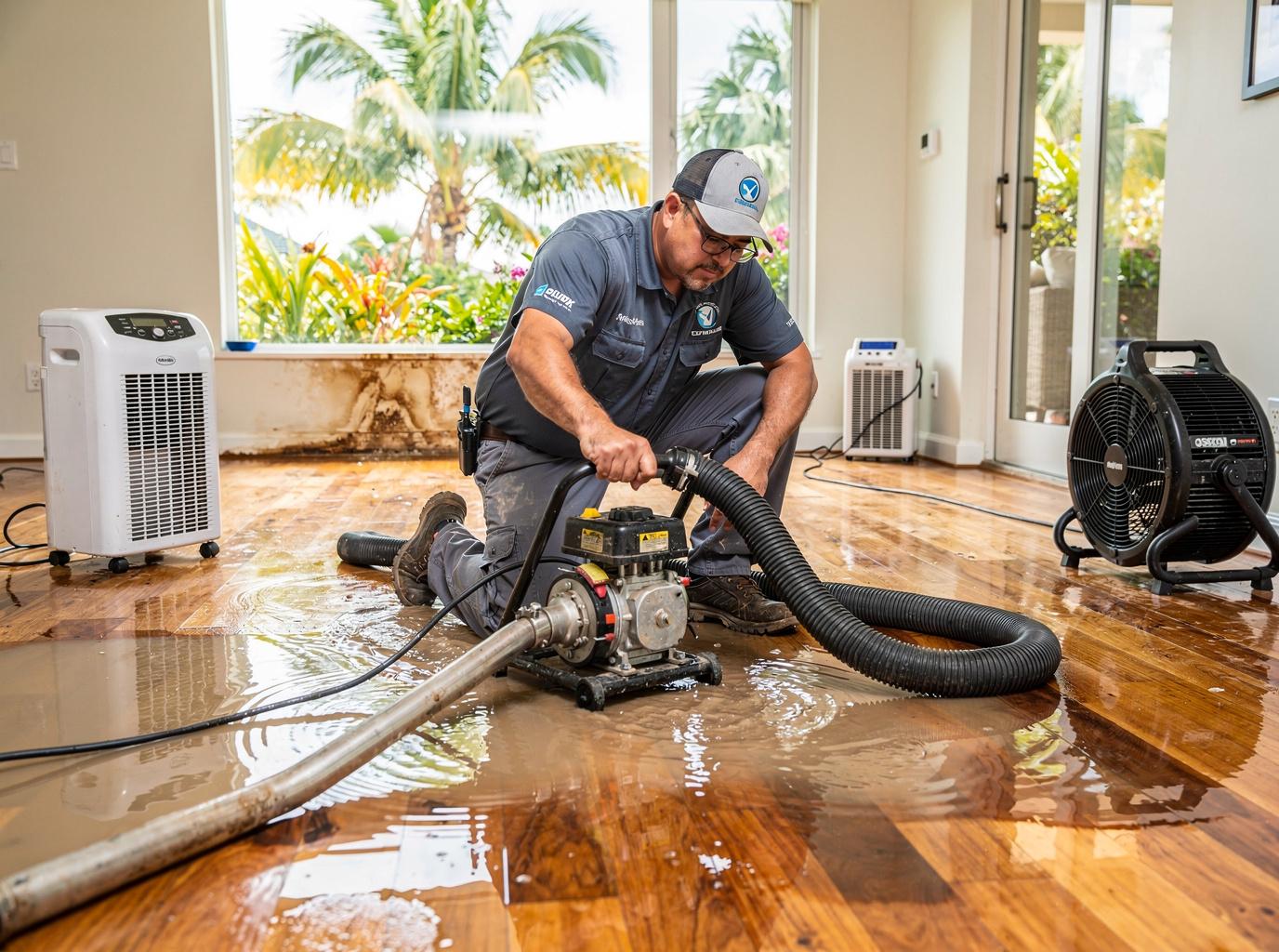
Waimanalo Beach sits on Oahu's windward side where trade winds push moisture inland from the ocean and sudden downpours collect in low-lying yards. Honolulu Water Damage Restoration Pros reaches properties here from our base at 1750 Kalākaua Ave by taking Kalanianaole Highway east, often arriving before standing water soaks deeper into slab foundations common on older beach lots. We extract water, place drying equipment, and monitor humidity levels that stay high because of the tropical climate even during the dry season.
Many single-wall homes and 1960s concrete-block houses in Waimanalo Beach have limited crawl-space access and sit on coral fill that holds moisture. After storms, water migrates under vinyl flooring and into wall cavities faster than in drier neighborhoods like Kaimuki. Our crews open these areas carefully, use moisture meters on the trade-wind-exposed walls, and return daily to adjust equipment so mold does not take hold before homeowners return from work.
Around Waimanalo Beach
We regularly work near:
- 📍Waimanalo Beach Park
- 📍Waimanalo Elementary & Intermediate School
- 📍Waimanalo District Park
- 📍Bellows Field Beach Park
- 📍Kalanianaole Highway
Water Damage Restoration in Waimanalo Beach — Local Notes
- •Coral-based soil along Waimanalo Beach Road and Inilauakea Stream slows drainage, so we often run extra air movers under raised homes for several days after extraction.
- •Single-wall construction common on lots near Waimanalo Elementary School requires slower drying to avoid warping the tongue-and-groove boards that form both structure and finish.
- •Kalanianaole Highway access means equipment trucks can reach most streets quickly, but narrow driveways on beachfront parcels limit large dehumidifier placement so we stage smaller units.
- •Salt air from onshore winds accelerates corrosion on metal HVAC components after flooding, so we inspect and replace affected ductwork in homes east of Bellows.